How to grow your app with no budget
Ads rent people's attention. Dropbox, Gymshark and Tinder borrowed it for free. The three places to borrow attention for your app, and how to start this week.

·5 min read
On this page
Most people think no budget means no growth. But Dropbox, Gymshark and Tinder all grew to millions of users without big ad budgets.
They used different tactics. Underneath, they all did the same thing, and you can do it too.
The short version
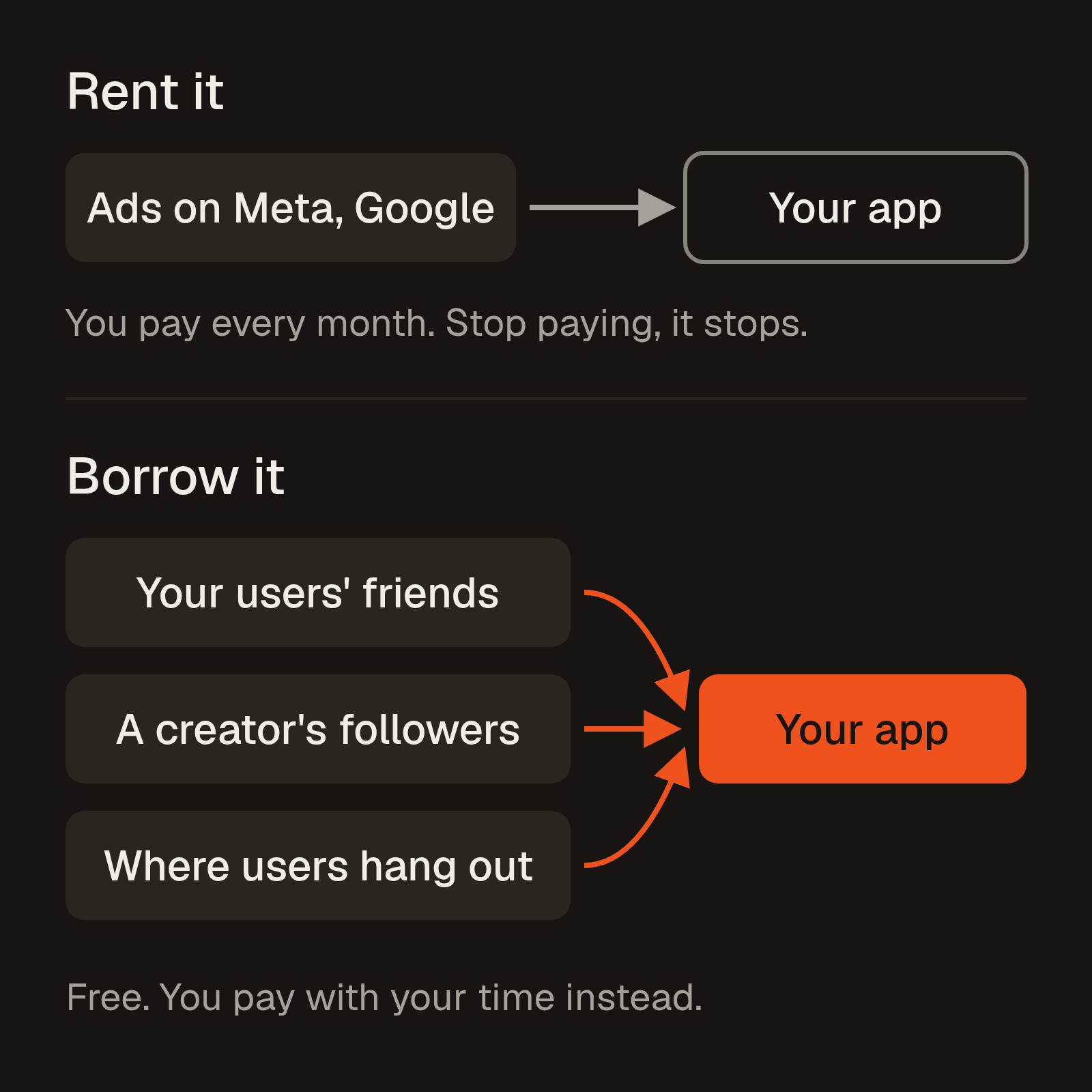
The people you want to reach are already paying attention to something: their friends, creators they follow, groups they're in. Ads pay Meta or Google to interrupt that. These companies found a way into it for free.
Ads rent attention. You can borrow it instead, from three places: your users' friends, a creator's followers, and the places your users already hang out.
Every one of them borrowed attention
Here's where each company found people who were already paying attention, and how they got in front of them.
| Company | Whose attention they borrowed | How |
|---|---|---|
| Dropbox | Their users' friends | Invite a friend and you both get free storage |
| Hotmail | Everyone their users emailed | A sign-up line at the bottom of every email |
| Gymshark | Fitness creators' followers | Free shirts to small creators |
| Tinder | College students at parties | Parties you needed the app to get into |
| Airbnb | People searching Craigslist | Listings posted to Craigslist too |
"Growth hacking" sounds like a bag of tricks. Look at the table and it's really one question: whose attention can I borrow?
1. Your users' friends
Dropbox started in 2008 as a place to store your files online. It couldn't afford ads, so it put the ad inside the product: invite a friend, and you both get extra free storage. Drew Houston, the founder, later said this raised signups by about 60%. Dropbox went from about 100,000 users to 4 million in roughly 15 months.
Hotmail, one of the first free email services, did it with one line. Every email its users sent ended with "PS: I love you. Get your free email at Hotmail." It reached about 12 million users in roughly a year and a half.
What people miss: Hotmail users never decided to share anything. Just using the product spread it. Dropbox worked because the friend got something too, so an invite felt like a favor, not a sales pitch.
Try this: find the moment your app gives someone the most value. Put a reason to share right there: a reward for both people, or a result good enough to post (a score, a before and after, a yearly recap).
2. A creator's followers
Ben Francis started Gymshark, a gym clothing brand, at 19, printing shirts in his garage. Instead of buying ads, he sent free shirts to small fitness creators on YouTube and Instagram. They wore them in their videos, and their followers started buying. Gymshark became a billion-dollar brand.
What people miss: he wasn't really borrowing reach. He was borrowing trust. Followers believe a creator they've watched for a year more than any ad. That's why a creator with 5,000 followers who all care about your topic can beat one with a million followers who don't. Small creators also say yes, often for free access or a small cut of sales.
Try this: list 10 to 20 small creators whose followers are the people your app is for. Give them free access and something worth showing on camera.
3. Places your users already hang out
A dating app with nobody on it is useless. Tinder fixed that early on by throwing parties at USC where you needed the app to get in. In one night, a whole room of students was on Tinder at the same time. Then the team did it again at the next campus.
Airbnb, back when it was a small site for renting out a spare room, went where travelers already looked: Craigslist, a huge classifieds site. It let hosts post their listings to Craigslist too, even though Craigslist never offered an official way to do it.
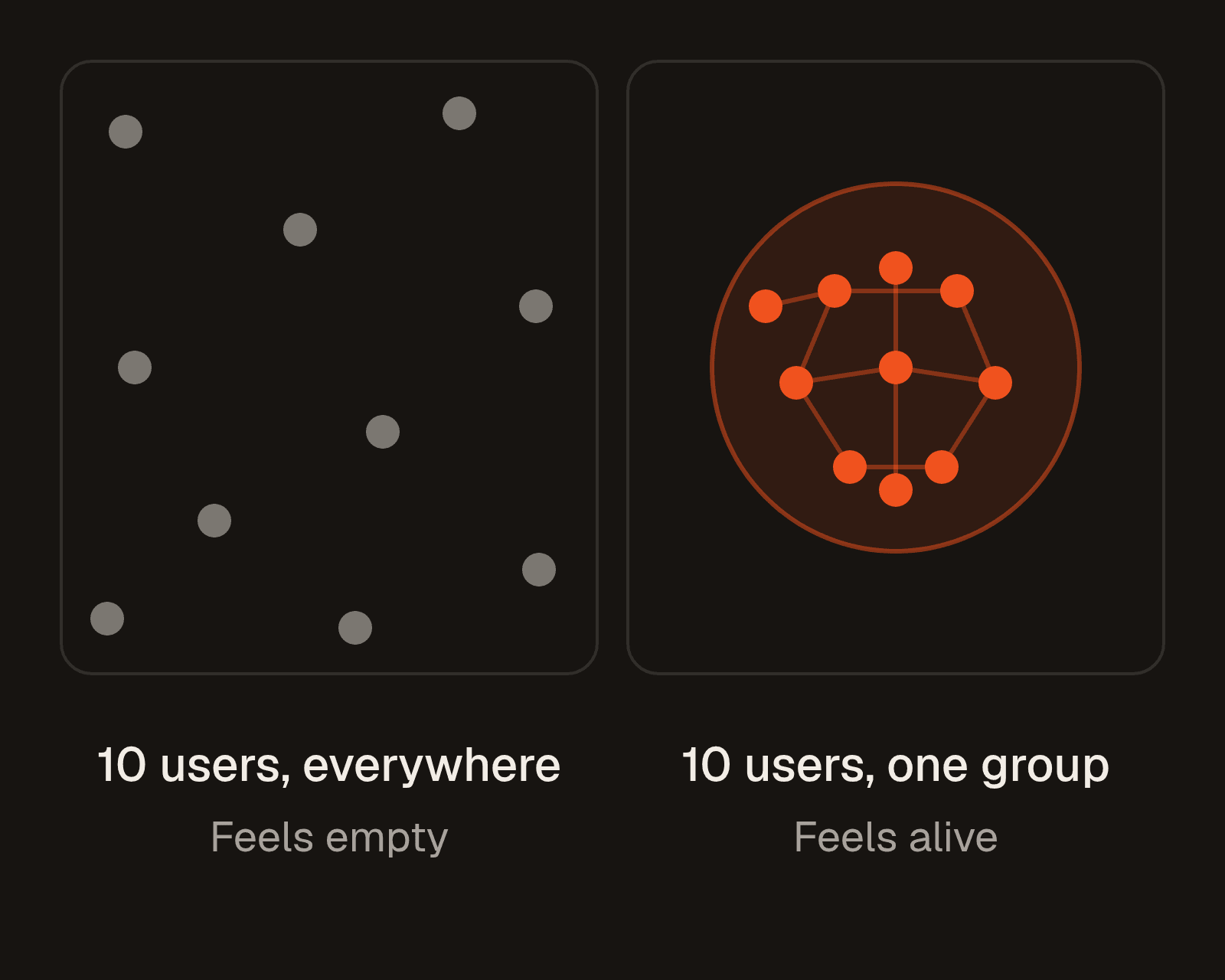
What people miss: Tinder didn't try to be everywhere at once. It filled one place first, then moved to the next. Ten users in the same group run into each other, and the app feels alive. The same ten users scattered across the internet never do, and the app feels empty.
Try this: write down the exact subreddits, Discord servers, Facebook groups and forums where your users already talk. Pick one. Show up as a helpful member, answer questions, and let your app come up naturally.
Three things most guides leave out
1. Free costs time. Ads trade money for time. Borrowing trades time for money. Neither one is free. If you have more time than money, borrowing wins.
2. Copy the idea, not the trick. Hotmail's line worked because nobody had seen one before. Now every email says "Sent from my iPhone" and nobody notices. Airbnb's Craigslist move wouldn't fly today. Tricks wear out. The question "whose attention can I borrow?" doesn't.
3. It only spreads what you already have. If people don't like your app, a referral reward just spreads that faster. Creators kept wearing Gymshark because the shirts were good. Make sure the people you already have are happy before you help them tell others.
My own small test
Prospect Ping is my app for baseball fans who follow minor league prospects. It sends you an alert when a player you follow is in the lineup, at bat or pitching.
It got its first 1,300 users without a dollar spent on ads, and I didn't post about it on my own social accounts. I messaged small baseball creators, and I answered questions in Reddit threads, Facebook groups and dynasty baseball forums where those fans already talked. I still haven't paid for a single user.
That's #2 and #3 from above. I haven't built #1 into the app yet.
Pick one this week
You don't need all three. Start with the one you already have:
| If you have... | Start with |
|---|---|
| Users who already like the app | 1. Their friends. Add one reason to share at the best moment. |
| Creators in your niche you could message | 2. A creator's followers. Message 10 this week. |
| A few places your users talk | 3. Where they hang out. Pick one and show up every day. |
Small and repeated beats big and once. Find whose attention you can borrow, give people a reason to pass your app along, and make it good enough that they want to.
Get better at growing apps.
New case studies and guides on how apps grow. Free, straight to your inbox.
Written by Matt Neves
I study how apps grow and break down the case studies for 20,000+ app builders as @agenticmatt. I test what I learn on my own apps.
More about meKeep reading
Growth loops · 7 min read
Pick the referral program that fits your app
Nobody shares an app to save 10%. How Harry's, Morning Brew and Robinhood got people sharing with rewards money can't buy, how to pick yours, and a prompt that designs it.

Acquisition · 2 min read
Find your first users with AI
Your first users are already posting about the problem your app solves. An AI research prompt that finds those threads and groups, and how to show up without spamming.
Growth loops · 5 min read
Growth is not marketing
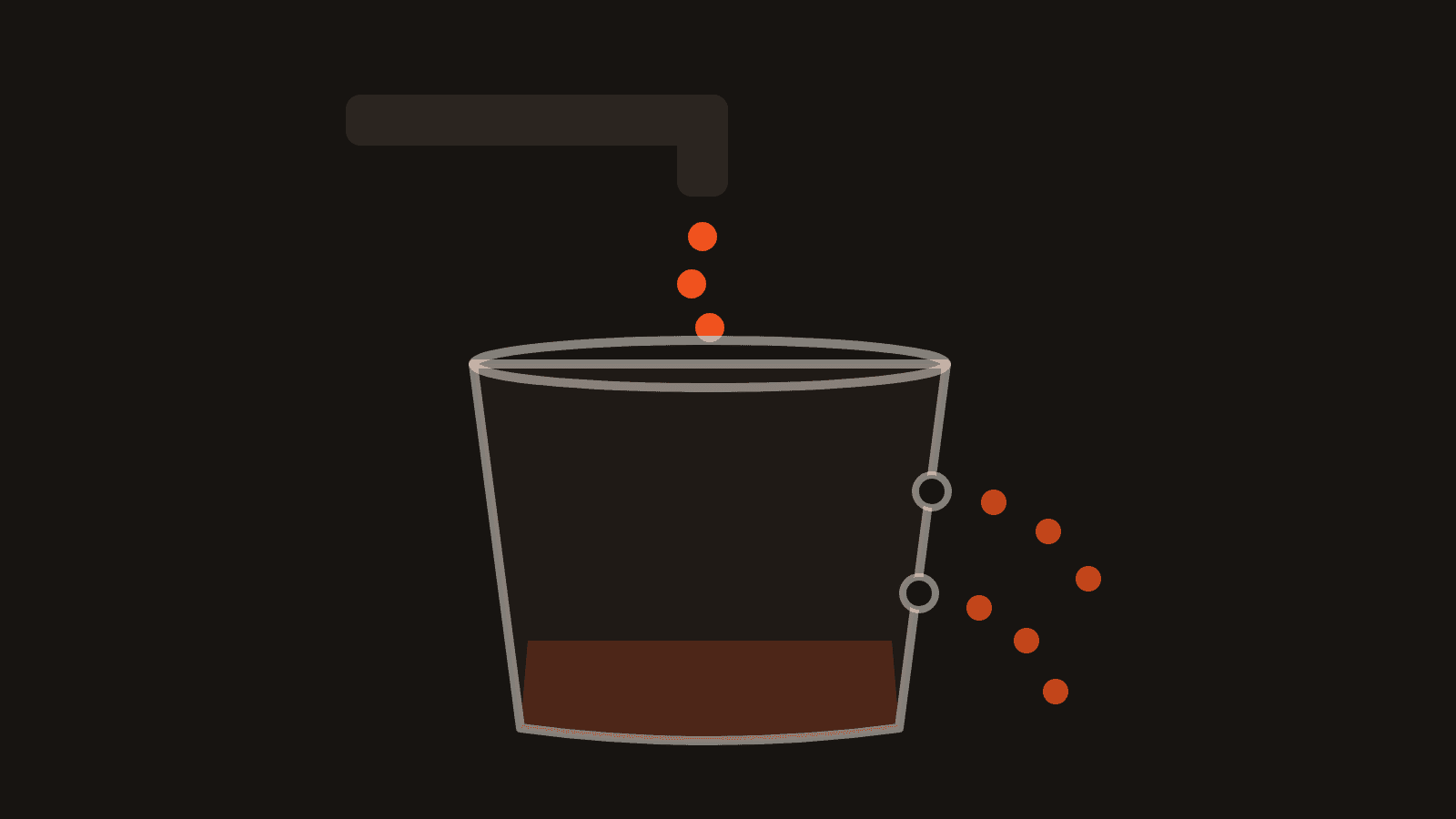
More marketing into an app that loses people is a leaky bucket. How to find the hole where your users give up, and why patching it beats pouring in more.